
How to Stop Fallen Leaves from Blocking Your Pool Filter
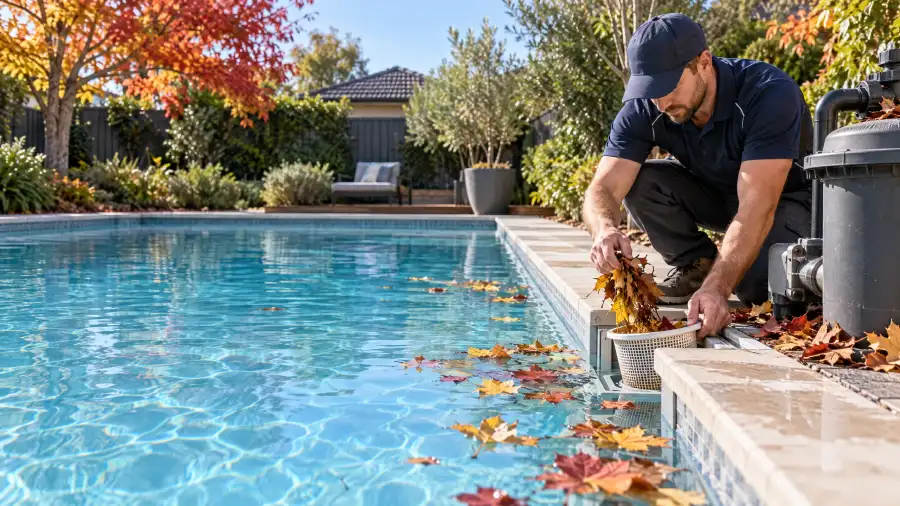
A practical autumn and winter guide to keeping leaves out of the skimmer, protecting water flow and knowing when your pool needs a professional check.
Fallen leaves are part of living around Glen Waverley’s established streets and gardens, but they should not become part of your pool’s filtration system. A few leaves on the surface are easy to remove. A windy week, however, can push a thick layer into the skimmer, fill the pump basket and restrict circulation before you notice a problem.
The good news is that leaf-related filter blockages are usually easier to prevent than to fix. The most effective approach combines frequent surface skimming, sensible garden preparation, clean baskets and a seasonal routine that matches the weather. It also means watching the equipment rather than assuming the pump is coping.
This guide explains what to do before, during and after the main leaf-fall period. If your pool already has poor circulation, unusual pump noise or water that is turning dull, arrange an inspection through the Glen Waverley pool cleaning and maintenance team before the issue grows.
Why leaves block a pool filter so quickly
Leaves do not only sit in the pool. Wind can carry them into the skimmer box, where they collect in the basket and reduce the amount of water reaching the pump. Smaller pieces may then pass through or break down into fine organic debris. That material can load the filter faster, add to surface staining and provide a food source for algae if the pool is not circulating and balanced properly.
A blocked basket can also make the pump work with insufficient water flow. The symptoms vary by pool and equipment, but common warning signs include a weak return jet, bubbles in the return line, a visibly low skimmer level, a pump that sounds different or a pressure reading that changes from its normal range. Treat these signs as a prompt to stop and check rather than simply running the pump for longer.
Prepare the pool before autumn leaf fall
Prevention starts outside the water. Walk around the pool and identify the trees, hedges and gutters that shed into the yard. You cannot control every leaf, but you can reduce the volume that reaches the coping and make collection easier.
Trim carefully and clear the surrounding area
Remove loose twigs and dead growth from the immediate pool surround. Keep branches away from the skimmer lid and make sure the lid remains visible and easy to lift. Do not undertake pruning near electrical equipment without appropriate care. The aim is not to reshape mature trees aggressively; it is to reduce avoidable debris and keep access clear for routine checks.
Check the leaf-catcher setup
If your pool has a skimmer weir, leaf canister or pre-filter, check that it is seated correctly and not cracked. A damaged or ill-fitting part may allow leaves to bypass the intended collection point. Use the model-specific basket or accessory recommended for your system. A makeshift mesh insert can collapse, restrict flow or break apart.
Make the normal water level easy to maintain
Evaporation, splash-out and heavy rain can all change the water level. If it falls too low, the skimmer may draw air instead of a steady stream of water. If it rises too high, the weir may not work as intended. Check the level as part of your regular routine and adjust it according to your pool manufacturer’s guidance.
A step-by-step routine for leaf-heavy weeks
During the busiest part of autumn, a short routine performed often is more useful than one long clean at the end of the week. After strong wind or heavy rain, inspect the pool before the next filtration cycle.
- Skim the surface first. Use a leaf net to remove floating leaves, seed pods and larger debris before they reach the skimmer. Move slowly so the net does not push debris across the pool. Work around steps, corners and the area behind the ladder, where leaves often settle.
- Empty the skimmer basket. Turn off the pump, lift the lid safely and remove the basket. Tip the contents into garden waste rather than rinsing them back towards the pool. Check for compacted leaves or small sticks caught beneath the basket, then replace it securely.
- Check the pump basket. With the system off, inspect the pump basket if your equipment instructions allow homeowner access. A basket that is repeatedly filling in a short time may indicate that the skimmer is overwhelmed or that a pre-filter needs attention.
- Brush settled debris towards collection points. Brush walls, steps and shallow ledges with a pool-safe brush. Avoid stirring up a large cloud of fine material immediately before a filtration cycle if the filter is already loaded. Vacuuming may be the better next step for heavy settled debris.
- Look at the return flow. Once the system is running again, compare the return jets with their normal strength. A noticeable reduction, air bubbles or a pump that repeatedly loses prime deserves attention. Do not keep resetting equipment without finding the cause.
- Record what you find. A simple note on windy days, basket fill levels and filter pressure helps you spot a pattern. If the pressure rises faster than usual or the flow remains weak after cleaning baskets, contact a professional for an equipment and filter assessment.
Keep the filter from becoming the leaf collection point
The filter is designed to catch fine suspended particles after larger debris has been removed. When it becomes the first place leaves and twigs collect, it can clog sooner and make circulation less effective. The correct cleaning method depends on whether you have a cartridge, sand or media filter, so follow the manufacturer’s instructions rather than using a generic schedule.
For cartridge systems, inspect the cartridge when the pressure gauge reaches the service range specified for your equipment or when flow drops. Rinse in the recommended direction and replace a cartridge that is damaged or no longer cleaning effectively. Sand and media filters require their own backwash or cleaning sequence. Do not change valve positions while the pump is running, and never guess at a backwash setting if you are unsure.
Also check the pressure gauge itself. A stuck or inaccurate gauge can make it difficult to tell whether the filter is genuinely loading up. If pressure changes are inconsistent, water is leaking or the filter lid and clamps look compromised, arrange professional pool service assessment rather than repeatedly cleaning without diagnosis.
Seasonal advice for Glen Waverley pools
Autumn: increase observation, not just filtration time
Longer pump runtime does not replace debris removal. Skim after windy weather and empty baskets before they become tightly packed. Keep the pool cover clean if you use one, and remove leaves from the cover before they wash into the water. A cover can reduce incoming debris, but it still needs correct handling and a safe storage routine.
Winter: keep a reduced routine going
Cooler weather often reduces swimming, but it does not stop leaves entering the pool. Continue checking the water level, surface and baskets. If the pool is being closed or used less frequently, read the site’s guide to preparing a Glen Waverley pool for spring after winter so the system is not forgotten for months.
Spring: clean before the first busy swim period
When warmer weather arrives, inspect the pool, skimmer, pump basket, filter and surrounding trees. Remove accumulated fine debris and check that returns, valves and the cleaner are behaving normally. If the water is cloudy or has a green tint, avoid swimming until its condition has been assessed. The pool cleaning after winter service is a useful starting point for a condition-led seasonal reset.
Do not overlook water balance after heavy leaf fall
Leaves add organic material to the water. Rain can also dilute or alter the pool’s chemistry. Clearing the basket is essential, but it is only part of getting the pool back into a stable routine. Check the water with a suitable method and interpret the result in line with your pool surface, sanitiser and equipment.
If readings are confusing, the water remains dull or algae starts to appear, professional green pool cleaning may be more appropriate than repeatedly adding products without understanding the cause. You can also ask the local team about digital water testing and chemical balancing through the main pool care service. Testing and equipment inspection should be treated as separate checks: clear water does not prove that a blocked filter or weak pump has been fixed.
Leaf-blockage checklist
- Skim leaves before they reach the skimmer.
- Switch off the pump before opening baskets or equipment lids.
- Empty the skimmer and pump baskets before they are packed tight.
- Check the water level and confirm the skimmer is drawing normally.
- Compare return flow and filter pressure with their usual readings.
- Keep the pool cover, coping, gutters and nearby garden area clear.
- Follow the correct cleaning method for your filter type.
- Arrange professional help if flow stays weak, the pump sounds unusual or water quality declines.
Frequently asked questions
How often should I skim leaves from my pool?
During heavy leaf fall, check the surface daily and after strong wind or rain. The right frequency depends on tree cover, the pool’s location and whether a cover is used. Frequent short checks are better than waiting until leaves have sunk or filled the skimmer.
Should I run the pump longer when there are lots of leaves?
More runtime cannot compensate for a blocked basket or filter. Remove large debris first, then run the system according to its normal schedule while observing flow and pressure. Ask for an equipment inspection if the system cannot maintain normal circulation.
Why is my pool filter blocking even after I empty the skimmer?
Fine leaf fragments may already be in the water, the pump basket may also be full, or the filter may need its type-specific cleaning. There could also be a damaged basket, poor water level or equipment fault. A technician can trace the restriction instead of treating only the visible leaves.
Can I use a leaf net over the skimmer?
Use only an accessory designed for your skimmer and installed according to its instructions. An unsuitable net can collapse over the opening or restrict flow. If you are unsure, rely on regular surface skimming and ask for advice during a pool service visit.
When should I book regular pool cleaning?
If leaf fall is a recurring problem, a planned visit can keep baskets, surfaces, water and filtration checks from being missed. Discuss a routine through the weekly pool service page, or request a one-off assessment if the problem has started suddenly.