Slippery steps or walls
Surface growth can make the pool uncomfortable and needs careful assessment before anyone swims.

Green patches, slippery surfaces or recurring growth can point to algae, but the pool should be assessed before treatment. Water condition and circulation may both matter.
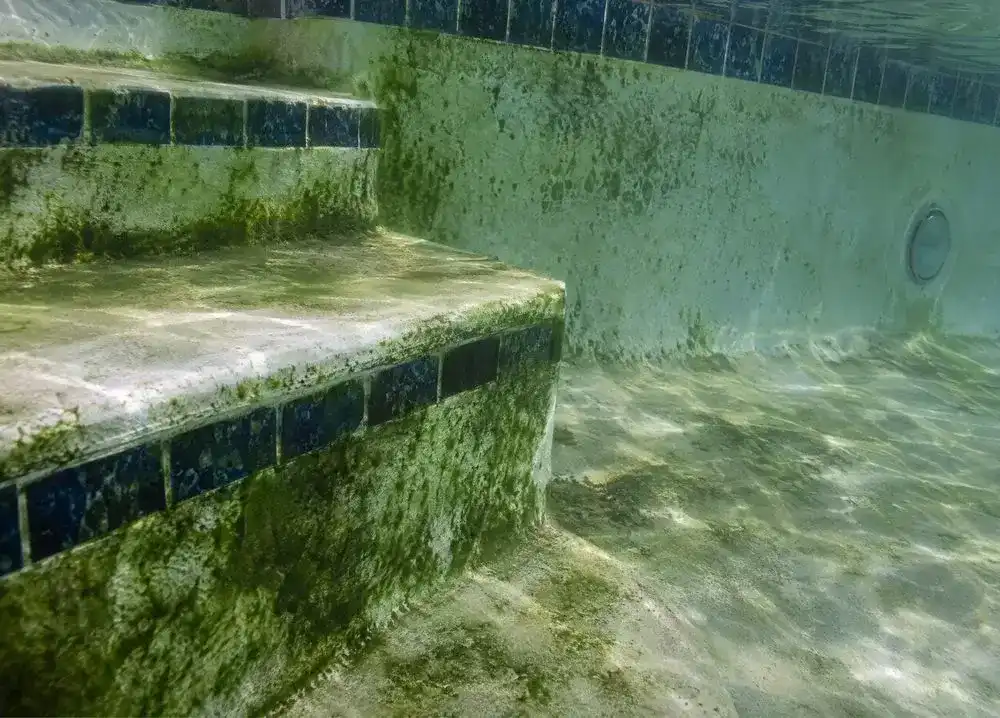
Describe what you can see without trying to diagnose the pool or add chemicals based on a photo.
Surface growth can make the pool uncomfortable and needs careful assessment before anyone swims.
Visible colour may suggest algae, but water quality, debris and circulation should also be considered.
If algae reappears after cleaning, ask whether filtration, pump flow or water readings need a closer look.
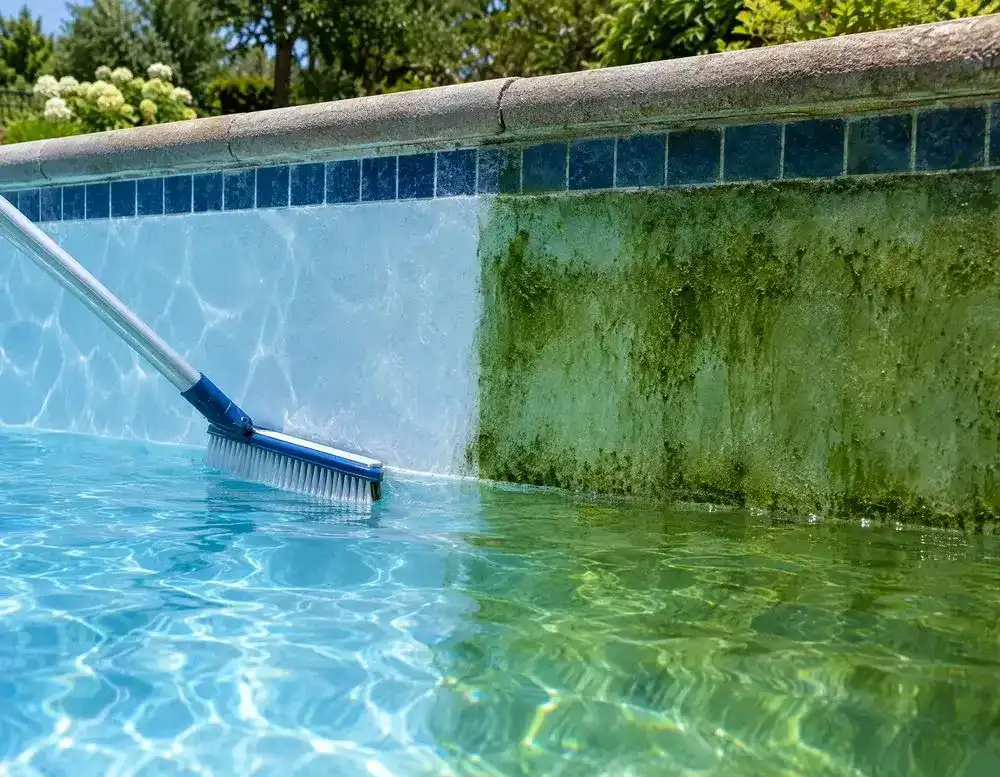
The agreed scope may combine surface work and water/equipment observations. Treatment details depend on testing and the pool condition.
The aim is to deal with visible growth and understand what may be sustaining it, without offering an unsafe chemical shortcut.
Share where growth appears, when it started, whether it returns and any recent weather, absence or treatment.
Agree the surface cleaning, debris removal and water or filtration checks that fit the pool’s condition.
Ask what follow-up is required. Keep swimmers out until water condition and relevant readings support safe use.
Do not mix pool chemicals or use a clear appearance as the only safety test. Follow product labels and appropriate professional advice.
An algae-specific enquiry keeps surface growth, water treatment and recurrence in view without pretending every pool needs the same fix.
Tell the team what you see; a photo or colour alone cannot establish the full cause.
Algae removal may need to be considered alongside testing and circulation, depending on the pool.
Ask what observations might explain repeat growth and whether a separate service is appropriate.
Wait for appropriate water checks and guidance before allowing anyone back into the pool.
The business lists Glen Waverley and surrounding areas. If you are nearby, share your suburb and the location of visible growth to confirm the service area and the right assessment.
Find the service that matches your pool’s condition, schedule or upcoming plans.
For loss of clarity requiring a cause-led water assessment.
Explore service 02For an urgent problem; attendance and scope must be confirmed.
Explore service 03For a pool that has turned green or needs a broader recovery plan.
Explore service 04For a single clean before departure or after returning.
Explore service 05For a seasonal clean and post-winter condition check.
Explore service 06For an ongoing schedule rather than a temporary holiday arrangement.
Explore service 07For pre-event preparation or a post-party pool reset.
Explore service 08For temporary visits and updates while the owner is away.
Explore serviceStraight answers before you book.
Tint, visible patches or slippery surfaces may be clues, but cloudiness can also have other causes. A pool assessment and relevant checks are needed before choosing treatment.
That depends on the extent of growth, water condition, filtration and any equipment issue. Ask for a condition-based plan; no one-visit result or fixed timeline is promised.
Keep swimmers out, note when the growth appeared, and share any recent products or test results. Do not mix or add chemicals based on guesswork.
Only after the water has been appropriately checked and the relevant guidance supports use. Do not use appearance alone or a universal wait time to make that decision.
For general Victorian guidance on pool water quality and chemical safety, see Better Health Channel. Guidance is general and does not replace assessment of your pool.